
homepage Feedback Contact Sitemap Email Us
 Flights Insurance Car Hire Special Quote Travel Guide Agent Login Resources 

Travel to Pakistan

 Pakistan Travel Guide
A trip through Pakistan is a face to face encounter with a fascinating land that has withstood countless invasions and preserved the essence of its conquerors in the form of present day monuments and archaeological heritage.
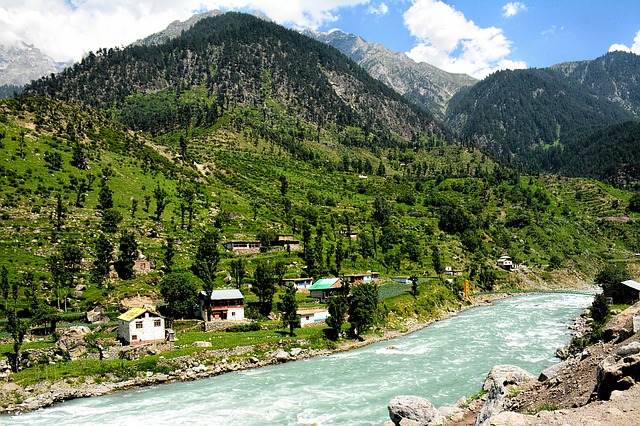
See for yourself the excavated sites at Mohenjodaro and Taxila - seats of the ancient Indus Valley and Gandhara civilizations; the architectural monuments of the Moghuls; the Khyber Pass - the historic inlet to South Asia - or the ancient unchanging traditions of the Kafir Kalash of the Chitral Valley. For those with an intrinsic love of mountains, Pakistan offers the unique pleasure of its northern mountain ranges, the Himalayas, the Hindukush and the Karakorams - a mountain wonderland unrivalled in the entire world with such formidable peaks as the K-2, the Nanga Parbat, the Rakaposhi, and the Trichmir. These ranges present an awesome challenge for those looking for trekking, mountaineering, angling, or jeep safaris. The resorts in these remote valleys make for an ideal summer get-away.
Pakistan has a total area of 803,940 square kilometers, slightly greater than France and the United Kingdom put together. Pakistan is located in South Asia. To the south is the Arabian Sea, with 1,046 km of Pakistani coastline. To Pakistan's east is India, which has a 2,912 km border with Pakistan. To its west is Iran, which has a 909 km border with Pakistan. To Pakistan's northwest lies Afghanistan, with a shared border of 2,430 km. China is towards the northeast and has a 523 km border with Pakistan. The main waterway of Pakistan is the Indus River that begins in China, and runs nearly the entire length of Pakistan, flowing through all of Pakistan's provinces except Balochistan. is fed by the combined waters of three of the five rivers of Punjab the Chenab, Jhelum, and Ravi. The waters of the other two rivers, the Beas and the Sutlej, are largely withdrawn for irrigation in India. Along the Indus and its tributaries are found most of Pakistan's population, its chief agricultural areas, and its major hydroelectric power stations, interconnected by the world's largest system of agricultural canals, join the Indus before it discharges into the Arabian Sea. The northern and western areas of Pakistan are mountainous. Pakistani administered areas of Kashmir contain some of the highest mountains in the world, including the second tallest, K-2. Northern Pakistan tends to receive more rainfall than the southern parts of the country, and has some areas of preserved moist temperate forest. In the southeast, Pakistan's border with India passes through a flat desert, called the Cholistan or Thal Desert. West-central Balochistan has a high desert plateau, bordered by low mountain ranges. Most of the Punjab, and parts of Sindh, are fertile plains where agriculture is of great importance.
bullet Pakistan emerged on the world map as an independent sovereign state in August 1947, as a result of the division of the British Indian Empire. With a land area of 796,095 sq. km. [including FATA (Federal Administered Tribal Areas) and FANA (Federal Administered Northern Areas)], its population stands at nearly 172.80 million, according to the 2008 Census. Historically, this is one of the most ancient lands known to man. Its cities flourished before Babylon was built; its people practiced the art of good living and citizenship before the celebrated ancient Greeks. The region traces its history back to at least 2,500 years before Christ, when a highly developed civilization flourished in the Indus Valley. Excavations at Harappa, Mohenjodaro and Kot Diji have brought to light evidence of an advanced civilization flourishing here even in most ancient times. Around 1,500 B.C. the Aryans conquered this region and slowly pushed the Hindu inhabitants further east, towards the Ganges Valley. Later, the Persians occupied the northern regions in 5th century B.C. The Greeks came in 327 B.C., under Alexander of Macedonia, and ran through the region like a meteor. In 712 A.D. the Arabs, led by Mohammed Bin Qasim, landed somewhere near what is now Karachi, and ruled the lower half of Pakistan for two hundred years. During this time Islam took root and influenced the life, culture and traditions of the inhabitants of the region. From 10th century A.D. onwards, a systematic conquest of Indo-Pakistan by the Muslims from Central Asia began and lasted up to 18th century A.D., when the British colonized the Sub-continent and ruled for nearly 200 years (for 100 years over what is now Pakistan). The Muslim revival began towards the end of the last century when Sir Syed Ahmed Khan, a renowned leader and educationist, launched a movement for intellectual renaissance of the Indian Muslims. In 1930, the well-known poet/philosopher, Dr. Mohammed Iqbal conceived the idea of a separate state for the Muslims of the Sub-continent, and in 1940, the All-India Muslim League adopted the famous Pakistan Resolution. After seven years of untiring struggle, under the brilliant leadership of Quaid-e-Azam Mohammed Ali Jinnah, Pakistan emerged on the world map as a sovereign state on August 14, 1947, when the British Indian Empire was partitioned into two independent states - India and Pakistan.
bullet From the mighty stretches of the Karakorams in the North to the vast alluvial delta of the Indus River in the South, Pakistan remains a land of high adventure and nature. Trekking, mountaineering, white water rafting, wild boar hunting, mountain and desert jeep safaris, camel and yak safaris, trout fishing and bird watching, are a few activities, which entice the adventure and nature lovers to Pakistan. Pakistan is endowed with a rich and varied flora and fauna. High Himalayas, Karakoram and the Hindukush ranges with their alpine meadows and permanent snow line, coniferous forests down the sub-mountain scrub, the vast Indus plain merging into the great desert, the coast line and wetlands, all offer a remarkably rich variety of vegetation and associated wildlife including avifauna, both endemic and migratory. Ten of 18 mammalian orders are represented in Pakistan with species ranging from the world's smallest surviving mammals, the Mediterranean Pigmy Shrew, to the largest mammal ever known; the blue whale.
bullet Great deals on flights all year round.
bullet Cheap Flights To Pakistan Book your cheap flight to Pakistan from £420 only. Return travel fare inclusive of all charges and pre-payable taxes. Fantastic Business and First class offers on flights to Pakistan. Hurry! Call us now to get this deal. The fare is subject to availability and may change anytime. So call us now to ensure that you get availability for this fare.


About Us :: Retrieve your booking :: Flights :: Airport Parking :: Car Hire :: Insurance :: Travel Guide :: Agent Login
Special Quote
:: Contact Us :: Links :: Terms and Conditions :: Data Protection :: Privacy Policy :: Blog
Agents for all major airlines.
Bookmark and Share
 
Cheap Flights to Pakistan Holidays to Pakistan Cheap Flights to bangkok
flights to dubai | Cheap Flights to Islamabad | Cheap Flights to Pakistan | Cheap Flights to Islamabad | Flights to Pakistan | Cheap Flights to Dubai |
| Flights to Bangkok | Flights to Dubai | Flights to India | Flights to Kuala Lumpur |
| Flights to Singapore | Flights to Malaysia | Flights to Saudi Arabia | Flights To Caribbean | Flights To China | Flights To South AfricaFlights To Africa |  Flights to Canada | Flights to UAE | Cheap Flights to USA | Flights to Thailand
cheap flights to pakistan
Cheap flights to Islamabad flights to Dubai Cheap flights to cape town